
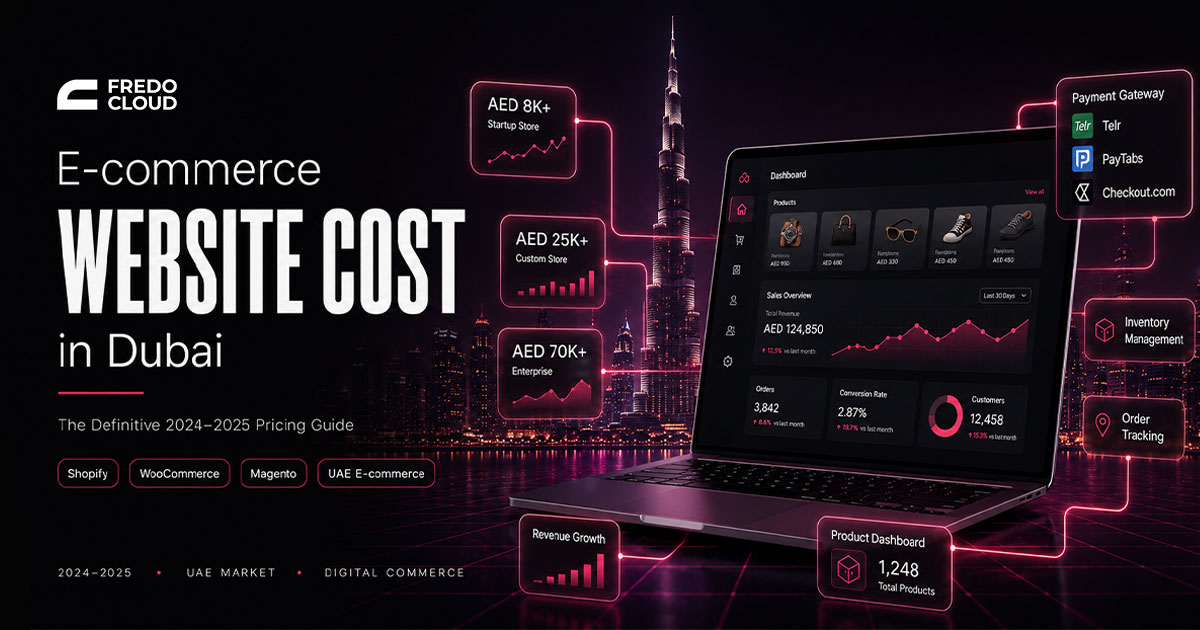
E-commerce Website Cost in Dubai: The Definitive 2024–2025 Pricing Guide
Launching an online store in the UAE is no longer just a trend; it is a fundamental requirement for retail survival in a market where digital penetration is among the highest globally. However, for many entrepreneurs and established brands, the primary hurdle remains understanding the actual e-commerce website cost in Dubai. Unlike a standard corporate site, an e-commerce platform involves complex layers of security, payment processing, inventory management, and logistics integration. In this guide, we will break down the financial requirements for building a successful digital storefront in the UAE, ensuring you can budget effectively for your next venture.
Understanding the Core Components of E-commerce Pricing
When calculating the e-commerce website cost in Dubai, it is vital to look beyond the initial development fee. A functional store is a combination of several moving parts, each with its own price tag. Broadly, your investment will be split into three categories: setup costs (licensing and legal), development costs (design and coding), and operational costs (hosting and maintenance).
In the UAE, the legal framework requires every online business to have a valid trade license. Depending on whether you choose a Free Zone or Mainland setup, this can range from AED 6,000 to AED 15,000 annually. Following this, the choice of platform—be it Shopify, WooCommerce, or a custom-built solution—will dictate the bulk of your development spend. For a professional E-commerce Development Dubai project, you should expect a comprehensive quote that includes UI/UX design, mobile responsiveness, and local integration.
Breakdown by Store Complexity and Platform
The most significant factor in determining your budget is the complexity of your requirements. A small boutique selling ten items has vastly different needs than a multi-brand marketplace with thousands of SKUs. Below is a breakdown of what you can expect to pay for different tiers of development in the UAE market.
1. Basic E-commerce Setup (AED 8,000 – AED 20,000)
This tier is ideal for startups and small businesses. Usually built on platforms like Shopify or WooCommerce using premium templates, these stores offer standard features like product listings, a shopping cart, and basic payment integration. While the design is template-based, it is customized with your branding. This is the most cost-effective way to validate a business idea in the Dubai market without a massive upfront investment.
2. Mid-Level Custom Stores (AED 25,000 – AED 65,000)
For growing brands, a mid-level store offers semi-custom designs and advanced functionality. This includes custom product filters, loyalty programs, and integration with local couriers like Aramex or Fetchr. At this level, agencies often provide specialized Shopify Development Dubai services that involve custom liquid coding to bypass template limitations, ensuring your store stands out in a crowded marketplace.
3. Enterprise & Custom Solutions (AED 70,000 – AED 150,000+)
Large-scale retailers requiring headless commerce, multi-currency support, or complex ERP integrations fall into this category. These builds are often entirely bespoke or utilize high-end platforms like Magento (Adobe Commerce) or Shopify Plus. The focus here is on performance, scalability, and deep data integration. For businesses targeting the entire GCC, our Magento Development Dubai team recommends this tier to handle high traffic volumes and complex tax calculations across borders.
Comparison of Popular E-commerce Platforms in the UAE
Choosing the right platform is a strategic decision that affects your long-term e-commerce website cost in Dubai. Here is how the top contenders compare in the local context:
| Feature | Shopify | WooCommerce | Magento (Adobe Commerce) |
|---|---|---|---|
| Setup Cost | Low (AED 3,000+) | Medium (AED 5,000+) | High (AED 40,000+) |
| Monthly Fees | AED 110 - AED 1,100 | Varies (Hosting) | High (Licensing) |
| Ease of Use | Excellent | Good | Complex |
| Customization | Limited (unless Liquid) | High | Unlimited |
| UAE Integration | Native Support | Plugin Required | Custom Dev Required |
Local UAE Costs: Licensing and Payment Gateways
You cannot run an e-commerce business in Dubai without considering the "hidden" local costs. These are non-negotiable expenses that ensure your business operates legally and can actually accept money from customers in the UAE.
E-commerce Licensing: In Dubai, you generally need an e-trader license (for UAE/GCC nationals) or a full commercial license with an e-commerce activity. Free zones like Meydan or Shams offer packages starting around AED 6,000. If you require a physical office or want to trade directly in the mainland, costs can rise significantly.
Payment Gateway Fees: To accept credit cards, you need a gateway. Popular local options include Telr, PayTabs, and Checkout.com. Most charge a setup fee (AED 1,000 – AED 2,000) and a transaction fee (typically 2.8% + AED 1.00). Some platforms like Shopify also charge additional transaction fees if you do not use their native payment processor, though Shopify Payments is now increasingly available in the UAE.
The Role of UI/UX Design in Your Budget
A common mistake is viewing design as a secondary expense. In the competitive Dubai landscape, where consumers expect high-end visuals and frictionless journeys, the e-commerce website cost in Dubai must include professional UI/UX design. A poorly designed store will have a high bounce rate, essentially wasting the money you spend on marketing.
Investing in custom UI/UX means your site is built around the specific shopping behaviors of UAE users—such as a preference for mobile-first browsing and clear "Cash on Delivery" options. Agencies that specialize in custom web development will spend 40–60 hours on the design phase alone, ensuring that every button and transition is optimized for conversion. While this adds to the initial quote, the return on investment through higher conversion rates is substantial.
Maintenance and Post-Launch Expenses
Your website is a living digital asset. Once the site is live, you will encounter recurring costs that are essential for security and performance. In the UAE, hosting should ideally be on local servers or high-quality CDNs to ensure low latency for users in Abu Dhabi and Sharjah.
Annual maintenance usually costs 10% to 20% of the initial build price. This covers security patches, plugin updates, and minor design tweaks. Furthermore, you must budget for digital marketing. Ranking an e-commerce site in the UAE requires a robust SEO strategy. You might find our recent guide on GEO for UAE brands helpful for understanding how AI search is changing the way customers find products online.
Why Custom Development Often Saves Money Long-Term
While templates are tempting due to their low entry price, they often become a liability as your business grows. Template-heavy sites are frequently bloated with unnecessary code, leading to slow load times—a major ranking factor for Google.
By opting for a more tailored approach, such as WooCommerce Development UAE, you only build what you need. This results in a leaner, faster site that is easier to scale. Moreover, custom builds allow for better integration with local logistics providers, automating your fulfillment process and saving hundreds of man-hours in the long run. When evaluating the e-commerce website cost in Dubai, always consider the total cost of ownership over three years, not just the launch price.
FAQ: E-commerce Website Cost in Dubai
1. Can I build an e-commerce site for under AED 5,000? It is possible to use DIY platforms like Wix or a basic Shopify store on your own for this price. However, this will not include professional design, custom functionality, or UAE-specific integrations. For a business-ready store, AED 8,000 is the realistic starting point.
2. How long does it take to build a store in Dubai? A basic store can be ready in 3–4 weeks. A mid-level custom project usually takes 8–12 weeks, while enterprise solutions can take 6 months or more depending on the complexity of the integrations.
3. Do I need a separate license for every product category? Generally, no. Most e-commerce licenses allow for a broad range of "General Trading" or specific categories like "Fashion" or "Electronics." However, certain items like health supplements or food require additional approvals from the Dubai Municipality.
4. Which payment gateway is best for UAE startups? Telr and PayTabs are excellent for startups due to their easy integration and local support. For high-volume businesses, Checkout.com offers more competitive transaction rates but has stricter onboarding requirements.
5. Does the cost include SEO and marketing? Usually, no. Development quotes cover the build. Marketing is a separate, ongoing investment. We recommend budgeting at least AED 5,000 per month for initial performance marketing to drive traffic to your new store.
Where to go next
Calculating the e-commerce website cost in Dubai is the first step toward digital success. Whether you are a small business looking for a sleek Shopify setup or a large enterprise requiring a robust Magento build, Fredocloud provides the technical expertise to bring your vision to life.
Ready to get a precise quote for your project? Explore our E-commerce Development Dubai services or contact our team today to discuss your specific requirements. If you are still in the research phase, check out our insights on the latest digital marketing trends in the UAE to plan your post-launch growth strategy. Let’s build something that converts.