
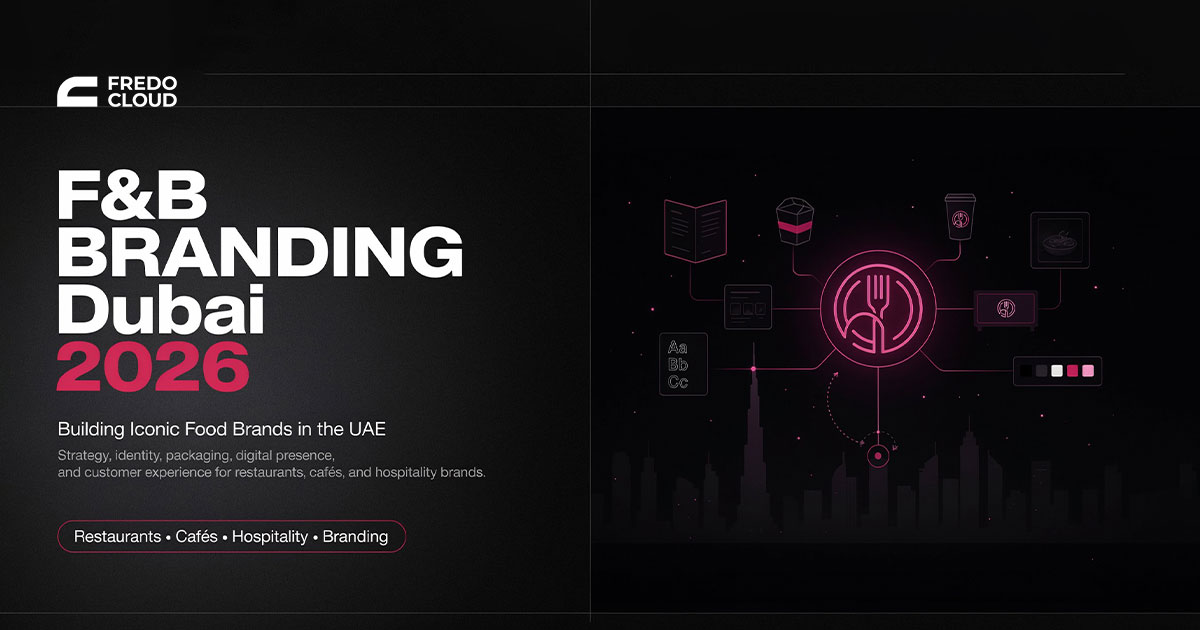
F&B Branding Dubai: Building Iconic Food Brands in the UAE
In the competitive landscape of the Emirates, F&B branding Dubai has evolved from simple logo creation into a complex science of sensory experience and cultural resonance. Whether you are launching a boutique coffee shop in Jumeirah or a high-end fine dining concept in DIFC, your brand identity is the primary driver of customer loyalty and market share. In a city where thousands of new dining concepts open annually, standing out requires more than just good food; it requires a narrative that connects with the diverse, cosmopolitan population of the UAE.
At Fredocloud, we understand that the UAE market presents unique challenges and opportunities. From navigating the regulatory requirements of the Dubai Municipality to appealing to over 200 nationalities, a successful F&B brand must be both globally relevant and locally grounded. This guide explores the strategic pillars of building a resilient food brand in the Middle East, covering everything from visual identity to the digital touchpoints that define modern dining.
The Strategic Foundation of F&B Branding Dubai
Before a single logo is sketched or a menu item is tasted, a successful brand begins with a robust strategy. In the context of the UAE, this means defining your 'Unique Value Proposition' (UVP) against a backdrop of global franchises and home-grown success stories. Your strategy should answer why a resident in Downtown Dubai would choose your establishment over a hundred others within a five-kilometer radius.
Effective F&B branding Dubai starts with deep market research. This involves analyzing consumer behavior across different emirates—for instance, the fast-paced, luxury-driven demand in Dubai versus the more family-centric, traditional preferences often found in Sharjah or Al Ain. A brand strategy consultant UAE can help bridge these gaps, ensuring your concept resonates across the entire GCC region. Your strategy must also account for the 'delivery-first' culture of the UAE, where platforms like Talabat and Deliveroo often serve as the first point of contact between your brand and the customer.
Visual Identity: Beyond the Logo
While many think of branding as just a logo, in the F&B world, it encompasses every visual touchpoint. This includes your signage, staff uniforms, interior color palettes, and even the texture of your napkins. In Dubai’s Instagram-centric culture, 'visual hunger' is a real phenomenon. Your brand must be 'shareable'—every corner of your restaurant should ideally serve as a backdrop for social media content.
When developing your brand identity design Dubai, consider the psychology of color and typography. High-end concepts often lean toward minimalist, serif fonts and muted earth tones to convey sophistication, while fast-casual 'street food' brands might use vibrant, high-contrast colors to trigger appetite and energy. Localization is also key; incorporating subtle Arabic calligraphy or patterns can provide a sense of place that resonates with both locals and tourists without feeling like a cliché.
Menu Engineering and Sensory Branding
Your menu is your most important sales tool. Strategic F&B branding Dubai involves 'menu engineering'—the practice of designing a menu to influence customer choices and maximize profitability. This isn't just about layout; it's about how the brand voice is reflected in the descriptions of the dishes. Are you using poetic, descriptive language for a fine-dining experience, or punchy, fun copy for a burger joint?
Sensory branding extends to the physical menu itself. The weight of the paper, the smell of the leather binding, and even the ambient music in your venue are all extensions of your brand. In the UAE, where hospitality is deeply rooted in tradition, the 'welcome' experience—the scent of bukhoor or the presentation of gahwa—can be integrated into your modern brand identity to create a lasting emotional connection with the guest.
Packaging Design for the Delivery Era
In Dubai, delivery accounts for a significant portion of F&B revenue. This means your brand experience must travel well. Your packaging design Dubai needs to be more than just functional; it must be an 'unboxing' experience. When a customer receives their order in the Burj Khalifa or a villa in Mirdif, the packaging should reinforce the premium nature of your brand.
Consider sustainable materials, which are increasingly valued by the UAE's eco-conscious demographic following initiatives like COP28. Packaging that maintains food temperature and presentation while showcasing your brand’s visual identity ensures that the quality associated with your physical location is maintained in the customer's home. High-quality, branded stickers, custom-printed tissue paper, and sturdy, well-designed bags are small investments that yield high brand recall.
Digital Presence and Social Media Strategy
In the UAE, a brand that doesn't exist on social media effectively doesn't exist. Your digital presence is often the 'front door' of your restaurant. Effective F&B branding Dubai requires a cohesive strategy across Instagram, TikTok, and Google Maps. High-quality food photography is non-negotiable; in the UAE, people eat with their eyes first, often scrolling through a restaurant's 'Tagged' photos before making a reservation.
Your brand voice should remain consistent across all platforms. If your restaurant is a high-energy lounge in Business Bay, your social media should reflect that vibrancy through fast-paced reels and engaging captions. Conversely, a quiet bakery in Al Quoz should use softer visuals and a more personal, storytelling tone. Integrating your digital strategy with your logo design Dubai ensures that your brand is instantly recognizable, whether it's on a small smartphone screen or a massive billboard on Sheikh Zayed Road.
Pricing and Competitor Comparison in UAE F&B
Understanding where your brand sits in the market is crucial for long-term sustainability. The UAE F&B market is generally segmented into four tiers. Positioning your brand correctly within these tiers dictates your branding style, marketing spend, and operational standards.
| Tier | Concept Type | Average Spend (Per Person) | Branding Focus |
|---|---|---|---|
| Tier 1 | Fine Dining / Michelin Star | AED 500+ | Heritage, Exclusivity, Storytelling |
| Tier 2 | Premium Casual / Licensed | AED 150 - 450 | Lifestyle, Social Experience, Atmosphere |
| Tier 3 | Casual Dining / Cafes | AED 60 - 140 | Community, Consistency, Visual Appeal |
| Tier 4 | QSR / Street Food | AED 25 - 55 | Speed, Value, Functional Packaging |
Navigating the UAE Regulatory and Cultural Landscape
Successful F&B branding Dubai requires a deep understanding of local sensitivities. This includes ensuring all marketing materials are culturally appropriate and that any Arabic translations are accurate and high-quality. 'Transcreation'—the process of adapting a message from one language to another while maintaining its intent, style, tone, and context—is vital for brands looking to capture both the expat and local markets.
Furthermore, compliance with the Dubai Department of Economy and Tourism (DET) and Dubai Municipality guidelines regarding signage and advertising is essential. Your brand identity must be flexible enough to work within these regulations while still maintaining its unique edge. For example, signage in certain areas may require specific dimensions or bilingual text, which should be factored into your initial design phase to avoid costly rebrands later.
The Role of a Specialized Branding Agency
Building a brand in the UAE's fast-moving F&B sector is a monumental task. Partnering with a branding agency Dubai that understands the local nuances can be the difference between a concept that fades after six months and one that becomes a city staple. An agency provides the outside perspective needed to identify gaps in the market and the technical expertise to execute a vision across multiple platforms.
At Fredocloud, we specialize in creating 'future-proof' brands. We don't just design logos; we build ecosystems. From initial naming and strategy to the final rollout of your digital and physical assets, we ensure your brand is equipped to compete in the world's most exciting food city. Our approach combines data-driven insights with creative excellence, ensuring your F&B branding Dubai investment delivers tangible ROI through increased footfall and customer loyalty.